Introduction
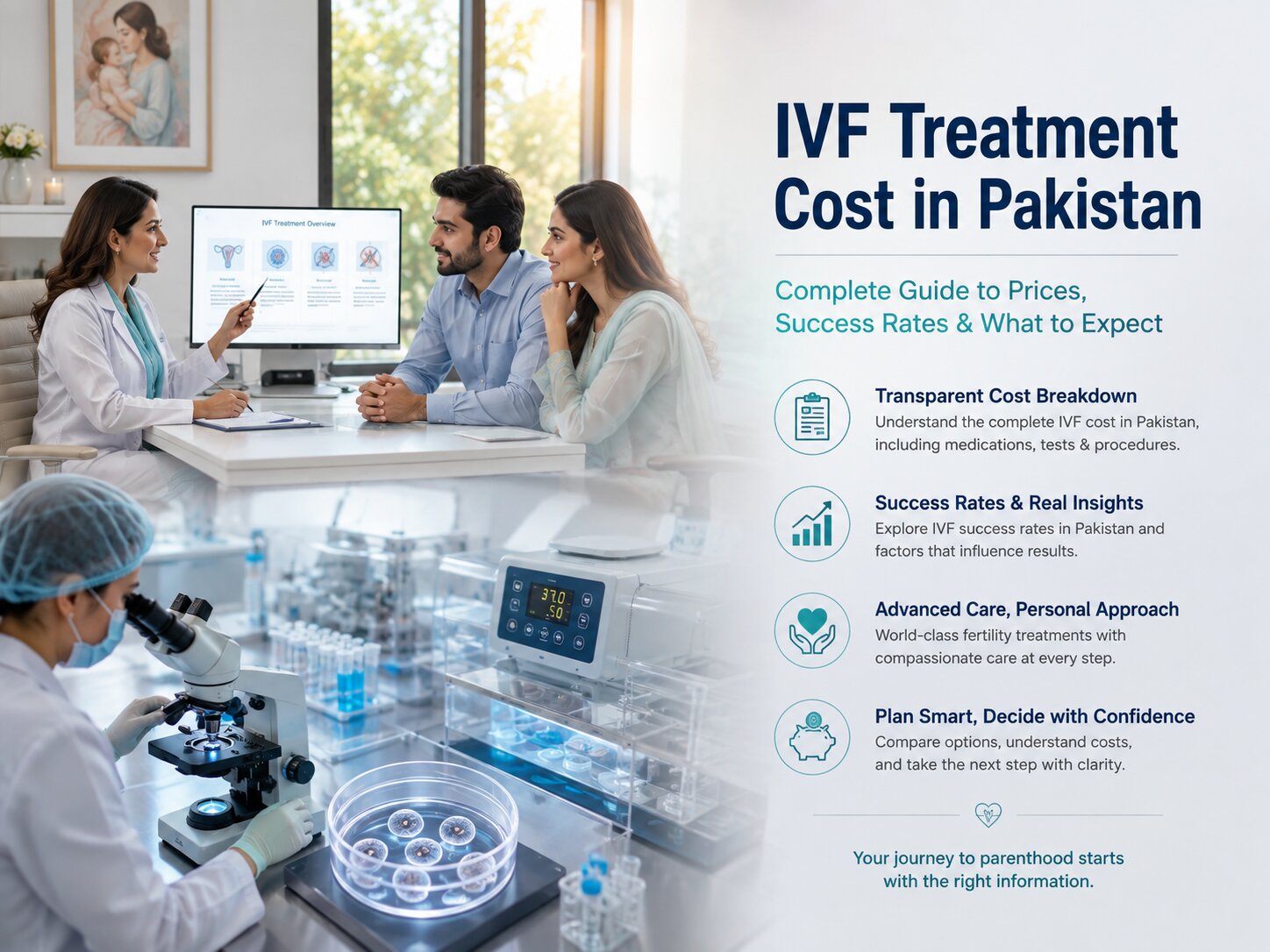
For many couples, IVF treatment offers hope after months or years of trying to conceive naturally. However, one of the first questions most people ask is, “What is the IVF treatment cost in Pakistan?”
The answer depends on several factors, including your medical condition, age, fertility history, medications, laboratory procedures, and whether additional treatments are needed. Understanding these costs before starting treatment can help you plan both financially and emotionally.
This guide explains the IVF treatment cost in Pakistan 2026, what is included in the price, what may increase the overall cost, how the IVF process works, success factors, possible risks, and practical tips for choosing a reputable fertility clinic in Pakistan.
Quick Answer Summary
IVF treatment cost in Pakistan generally ranges between PKR 450,000 and PKR 900,000 per cycle, depending on the clinic, medications, laboratory procedures, and individual treatment plan.
Additional procedures such as ICSI, embryo freezing, genetic testing (PGT), donor eggs, donor sperm, or frozen embryo transfer (FET) may increase the total cost.
The exact price should always be confirmed after a complete fertility assessment by a qualified fertility specialist.
What Is IVF Treatment?
In Vitro Fertilisation (IVF) is an assisted reproductive technology (ART) in which eggs are collected from the ovaries and fertilised with sperm in a specialised laboratory. The resulting embryo is then transferred into the uterus to achieve pregnancy.
IVF may be recommended when pregnancy has not occurred despite regular unprotected intercourse or when other fertility treatments have not been successful.
It is commonly used for:
- Blocked fallopian tubes
- Male infertility
- Ovulation disorders
- Endometriosis
- Unexplained infertility
- Advanced maternal age
- Recurrent IVF failure with modified treatment plans
- Certain genetic conditions requiring embryo testing
IVF Treatment Cost in Pakistan 2026
The IVF treatment cost in Pakistan 2026 varies between fertility centres and depends on the complexity of treatment.
| Treatment | Estimated Cost (PKR) |
|---|---|
| Initial fertility consultation | 5,000–15,000 |
| Fertility investigations | 20,000–80,000 |
| IVF medications | 80,000–250,000 |
| Standard IVF cycle | 450,000–900,000 |
| ICSI (if required) | Additional charges may apply |
| Frozen Embryo Transfer (FET) | Additional charges may apply |
| Embryo freezing | Additional charges may apply |
| PGT (Genetic Testing) | Additional charges may apply |
These are estimated price ranges. The actual IVF cost in Pakistan depends on the patient’s medical needs and clinic protocols.
What Does the IVF Treatment Cost Include?
Most IVF treatment packages include several stages of care. These commonly include:
- Initial fertility consultation
- Medical history review
- Hormonal blood tests
- Ultrasound monitoring
- Ovarian stimulation
- Fertility medications
- Egg retrieval procedure
- Laboratory fertilisation
- Embryo culture
- Embryo transfer
- Pregnancy blood test
Some clinics may charge separately for medications, embryo freezing, anaesthesia, advanced laboratory techniques, or follow-up appointments. Always ask for a detailed cost breakdown before beginning treatment.
Factors That Affect IVF Treatment Cost
Several medical and practical factors influence the IVF treatment cost.
Age — Women over 35 may require additional medications or more than one IVF cycle.
Fertility diagnosis — Complex fertility conditions often require more investigations or specialised procedures.
Fertility medications — Medication doses vary from one patient to another. Higher doses usually increase treatment costs.
ICSI — Intracytoplasmic Sperm Injection is often recommended for male infertility and increases laboratory costs.
Embryo freezing — Cryopreservation allows embryos to be stored for future use.
Genetic testing — Preimplantation Genetic Testing (PGT) may be recommended in selected cases but increases overall treatment expenses.
Number of IVF cycles — Some couples conceive during the first cycle, while others may need multiple attempts.
IVF Treatment Step by Step
Understanding the IVF process helps patients know what to expect.
Step 1: Fertility assessment — Both partners undergo fertility testing, including hormone tests, semen analysis, ultrasound scans, and medical evaluation.
Step 2: Ovarian stimulation — Hormonal injections encourage multiple eggs to mature.
Step 3: Monitoring — Regular ultrasound scans and blood tests monitor follicle growth.
Step 4: Egg retrieval — A minor procedure removes mature eggs from the ovaries.
Step 5: Fertilisation — The eggs and sperm are combined in the laboratory. Some couples may require ICSI.
Step 6: Embryo development — Embryologists monitor embryo growth for several days.
Step 7: Embryo transfer — One or more healthy embryos are transferred into the uterus.
Step 8: Pregnancy test — A blood test is usually performed about two weeks after embryo transfer.
Who May Need IVF Treatment?
A fertility specialist may recommend IVF for couples experiencing:
- Blocked or damaged fallopian tubes
- Severe male infertility
- Low sperm count
- Poor sperm motility
- Endometriosis
- Polycystic Ovary Syndrome (PCOS)
- Ovulation disorders
- Unexplained infertility
- Recurrent miscarriage in selected cases
- Failed IUI treatment
- Advanced maternal age
Success Rates of IVF
There is no guaranteed success rate for IVF. Success depends on:
- Woman’s age
- Egg quality
- Sperm quality
- Embryo quality
- Uterine health
- Underlying fertility condition
- Lifestyle factors
- Previous reproductive history
Generally, younger women have higher success rates than older women. Your fertility specialist can provide personalised expectations after assessment.
Risks and Possible Complications
Although IVF is generally considered safe, it carries some risks, including:
- Ovarian Hyperstimulation Syndrome (OHSS)
- Multiple pregnancy
- Ectopic pregnancy
- Miscarriage
- Bleeding after egg retrieval
- Infection
- Emotional stress
- Side effects from fertility medications
Regular monitoring helps reduce many of these risks.
Recovery After IVF
Most women recover quickly after egg retrieval. Recovery tips include:
- Rest for the remainder of the day
- Drink adequate fluids
- Take medications exactly as prescribed
- Avoid strenuous exercise for a short period
- Attend follow-up appointments
- Contact your doctor if severe pain, heavy bleeding, fever, or breathing difficulty develops
Lifestyle Tips to Support Fertility
Healthy lifestyle habits may improve overall reproductive health before IVF. Consider the following:
- Maintain a healthy body weight
- Eat a balanced diet rich in fruits, vegetables, whole grains, and lean protein
- Exercise regularly
- Stop smoking
- Avoid excessive alcohol
- Limit caffeine intake
- Manage stress
- Sleep 7–9 hours daily
- Control diabetes, thyroid disorders, and other chronic illnesses
IVF vs IUI
| Feature | IVF | IUI |
|---|---|---|
| Fertilisation | Outside the body | Inside the uterus |
| Complexity | Higher | Lower |
| Cost | Higher | Lower |
| Best for | Severe infertility | Mild infertility |
| Laboratory procedures | Yes | Minimal |
| Success per cycle | Generally higher in appropriate patients | Lower than IVF |
The best treatment depends on the cause of infertility and should be decided after medical evaluation.
Common Myths vs Facts
Myth: IVF always results in twins. Fact: Single embryo transfer is common and may reduce the chance of multiple pregnancy.
Myth: IVF guarantees pregnancy. Fact: Success varies depending on several medical factors.
Myth: IVF is only for women. Fact: Male infertility contributes to many infertility cases.
Myth: IVF is always painful. Fact: Most procedures involve minimal discomfort and are carefully monitored.
Myth: Older women always succeed with IVF. Fact: Age remains one of the most important factors affecting success.
When Should You See a Fertility Specialist?
Seek medical advice if:
- You are under 35 and have tried to conceive for one year without success
- You are over 35 and have tried for six months
- You have irregular menstrual cycles
- You have recurrent miscarriages
- You have known PCOS or endometriosis
- There is male infertility
- Previous fertility treatments have failed
Early assessment may identify treatable causes and help you choose the most suitable treatment.
Frequently Asked Questions
1. What is the average IVF treatment cost in Pakistan?
Most IVF cycles cost between PKR 450,000 and PKR 900,000, depending on the clinic and treatment requirements.
2. What is the IVF treatment cost in Pakistan 2026?
The expected price range remains approximately PKR 450,000–900,000, although individual clinics may differ.
3. Does the IVF package include medicines?
Not always. Many clinics charge medications separately.
4. Can IVF cost increase during treatment?
Yes. Additional medications or advanced procedures may increase the total cost.
5. Is IVF painful?
Most women experience mild discomfort rather than severe pain.
6. How long does one IVF cycle take?
A typical IVF cycle usually takes around four to six weeks.
7. Is IVF safe?
IVF is generally considered safe when performed by experienced fertility specialists.
8. Can IVF treat male infertility?
Yes. IVF combined with ICSI can help many men with severe sperm problems.
9. How many IVF cycles are usually needed?
Some couples conceive in the first cycle, while others require additional attempts.
10. How can I choose the right fertility clinic?
Look for experienced fertility specialists, qualified embryologists, transparent pricing, accredited laboratories, patient support, and clear treatment plans.
Conclusion
Understanding the IVF treatment cost in Pakistan helps couples prepare for one of the most important decisions in their fertility journey. While cost is an important factor, the quality of medical care, experienced fertility specialists, advanced laboratory facilities, personalised treatment plans, and transparent communication are equally important.
Because every couple’s situation is unique, the exact IVF treatment cost can only be determined after a comprehensive fertility evaluation. A personalised consultation allows your doctor to recommend the most appropriate treatment while explaining expected costs, possible additional procedures, and realistic outcomes.