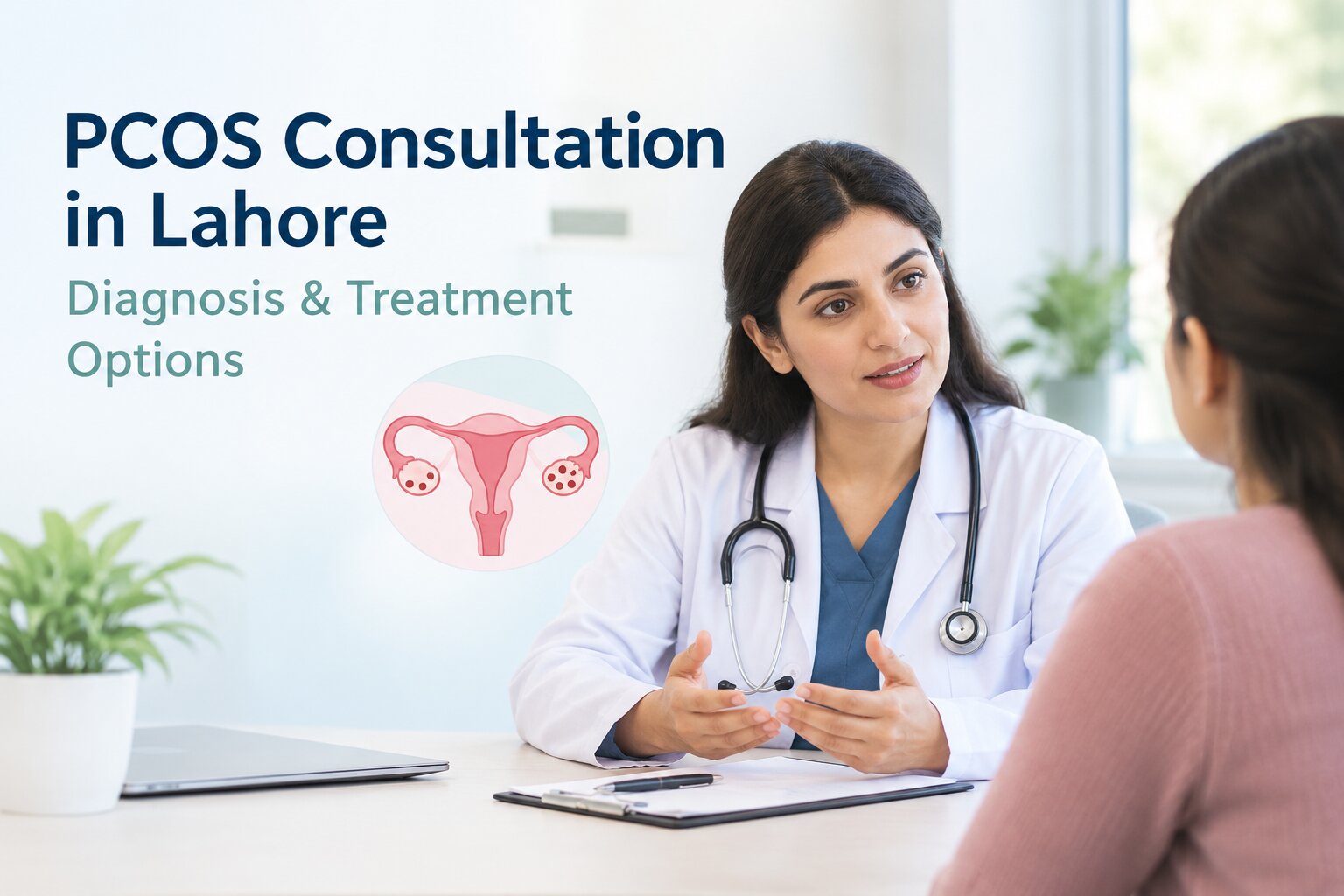
PCOS Consultation in Lahore: Diagnosis, Tests and Treatment Options
Irregular periods, persistent acne, unwanted facial hair or difficulty getting pregnant can leave you wondering whether you have polycystic ovary syndrome (PCOS). These symptoms can have several causes, and not everyone experiences them in the same way.
A PCOS consultation in Lahore can help you understand your symptoms, identify possible hormonal problems and decide which tests you may need. You do not need to wait until you are planning a pregnancy to seek medical advice. Early assessment can also help address menstrual problems and other health concerns associated with PCOS.
If you are worried about your periods, hormones or fertility, the first step is a proper medical assessment rather than starting treatment on your own.
Quick Answer: Where Should You Start if You Suspect PCOS?
If you suspect PCOS, consult a qualified gynaecologist or an appropriate fertility specialist. Your doctor will review your menstrual history, symptoms, medical background and any previous test results. Depending on your findings, they may recommend blood tests or a pelvic ultrasound.
PCOS treatment in Lahore should be based on your symptoms, overall health and pregnancy plans. There is no single treatment that suits everyone, but many symptoms and fertility-related concerns can be managed with appropriate medical care.
What Is PCOS, and How Can It Affect Your Health?
Polycystic ovary syndrome is a hormonal condition that can affect menstrual cycles, ovulation, skin, hair growth and metabolism. Ovulation is the process in which an ovary releases an egg.
Hormones called androgens are normally present in women in smaller amounts. Higher levels or increased androgen activity can contribute to acne, unwanted facial hair and thinning scalp hair.
PCOS may also be associated with insulin resistance. This means the body’s cells respond less effectively to insulin, the hormone that helps control blood sugar.
Some women notice symptoms during their teenage years, while others discover the condition when they have difficulty conceiving. Others seek medical advice because their periods have become irregular.
Having PCOS does not automatically mean you will experience infertility. Many women with the condition can become pregnant, sometimes with medical support.
What Are the Common Symptoms of PCOS?
PCOS symptoms vary from person to person. Some women have several noticeable symptoms, while others experience only a few.
Common signs include:
- Irregular, infrequent or absent menstrual periods.
- Persistent acne or unusually oily skin.
- Increased facial or body hair.
- Thinning hair on the scalp.
- Difficulty becoming pregnant because ovulation is irregular.
- Weight gain or difficulty managing weight in some cases.
- Darkened, thickened skin around the neck or other body folds, which can be associated with insulin resistance.
These symptoms do not confirm PCOS by themselves. Thyroid disorders, other hormonal conditions and certain medications can cause similar changes.
If your periods have stopped for several months, your hair growth has changed noticeably or you are struggling to conceive, arrange a medical assessment. A doctor can determine whether PCOS or another condition may explain your symptoms.
Who Should You See for a PCOS Consultation in Lahore?
A qualified gynaecologist is often the right starting point for assessing menstrual irregularities and suspected PCOS. A fertility specialist may also be appropriate when irregular ovulation or difficulty conceiving is the main concern.
An endocrinologist, a doctor who specialises in hormones and metabolic conditions, may be involved if your assessment suggests a more complex hormonal or metabolic problem.
When choosing a PCOS specialist in Lahore, consider the following:
- Relevant qualifications: Check the doctor’s recognised medical qualifications and specialist training.
- Experience with PCOS: Look for experience in menstrual disorders, hormonal assessment and fertility-related concerns.
- Individual assessment: Your consultation should consider your symptoms and medical history, not just an ultrasound report.
- Clear treatment explanations: The doctor should explain the purpose of recommended tests, treatment options and possible side effects.
- Follow-up care: PCOS may require ongoing monitoring rather than a single appointment.
The best doctor for your situation is one who can assess your specific concerns and explain a suitable care plan.
How Is PCOS Diagnosed?
PCOS is diagnosed by assessing symptoms, medical history and appropriate investigations. There is no single blood test that confirms every case.
For adults, doctors generally look for at least two of the following three features after excluding other possible causes:
- Irregular or absent ovulation: This often appears as irregular, infrequent or missing periods.
- Signs of excess androgens: These may include increased facial hair, persistent acne, scalp hair thinning or elevated androgen levels in blood tests.
- Polycystic ovarian appearance on ultrasound: Imaging may show an increased number of small follicles in the ovaries.
Not every patient needs an ultrasound to establish a diagnosis. When irregular ovulation and signs of excess androgens are already present, an ultrasound may not be necessary.
An ultrasound showing polycystic ovarian features alone does not automatically mean you have PCOS. Your doctor must interpret the findings alongside your symptoms and other clinical information.
Which Tests May Be Needed for PCOS?
Your doctor may recommend different tests depending on your symptoms and medical history.
| Investigation | Why it may be recommended |
|---|---|
| Hormone blood tests | To assess androgen levels and investigate other hormonal causes |
| Thyroid function test | To check whether a thyroid problem contributes to menstrual changes |
| Prolactin test | To investigate an elevated prolactin level that may affect periods |
| Pelvic ultrasound | To assess the ovaries and reproductive organs when indicated |
| Blood glucose assessment | To evaluate blood sugar problems and metabolic risk |
| Lipid profile | To assess cholesterol and other blood fats |
Not everyone needs every test. Your doctor will decide which investigations are appropriate.
Avoid purchasing a large panel of hormone tests without medical advice. Some results depend on your symptoms, menstrual cycle and current medicines, and unnecessary testing can create confusion.
What Happens During a PCOS Consultation?
Your first appointment should help establish what is happening and what needs to be investigated next.
1. Review of Your Medical History
Your doctor may ask when your periods started becoming irregular, how often they occur and whether you have noticed changes in your skin or hair. They may also ask about weight changes, medicines, family history of diabetes and previous pregnancies.
Bring any previous ultrasound reports, blood test results and prescriptions. This can prevent unnecessary repetition of investigations.
2. Assessment of Your Symptoms
The doctor will consider your symptoms together rather than treating each one in isolation.
For example, irregular periods combined with increased facial hair may suggest androgen excess. However, further assessment is needed to determine the cause.
3. Recommended Investigations
Your doctor may request blood tests or an ultrasound if the findings will help clarify the diagnosis or guide treatment.
4. Personalised Treatment Plan
Once the assessment is complete, your doctor can explain the likely diagnosis, available options and any necessary follow-up.
If you are planning pregnancy, mention this during your first consultation. Some medicines used to manage acne, excess hair or irregular periods are unsuitable during pregnancy or when trying to conceive.
What Are the Treatment Options for PCOS in Lahore?
PCOS treatment depends on the symptoms you want to address, your metabolic health and whether you are trying to become pregnant.
There is currently no single cure for PCOS. However, appropriate treatment can help manage symptoms, improve menstrual health and address fertility concerns.
Lifestyle Changes and Metabolic Health
Healthy eating, regular physical activity and adequate sleep can support overall health in people with PCOS.
These measures can improve metabolic health even when they do not lead to weight loss. If you have excess weight, an individual weight-management plan may also help improve some symptoms.
Avoid extreme diets or assuming that PCOS is caused by a lack of discipline. The condition involves hormonal and metabolic factors, and its effects differ between individuals.
Treatment for Irregular Periods
A doctor may recommend hormonal treatment to regulate bleeding and protect the lining of the uterus, depending on your medical history and pregnancy plans.
Long gaps between periods should not be ignored. In some people with PCOS, infrequent periods can allow the uterine lining to become excessively thick.
The right treatment depends on the reason for your irregular periods and whether you want to conceive.
Managing Acne and Unwanted Hair Growth
Some hormonal medicines can reduce androgen-related acne and unwanted facial or body hair. Other treatments may target acne or hair growth directly.
Results can take time, and different treatments have different risks. Your doctor should consider whether you need contraception, are planning pregnancy or have other medical conditions before recommending medication.
Treatment for PCOS-Related Fertility Problems
PCOS can interfere with ovulation, making pregnancy more difficult for some women. However, difficulty conceiving does not mean pregnancy is impossible.
When pregnancy is the goal, treatment may include:
- Assessment of ovulation and other possible causes of infertility.
- Lifestyle support where appropriate.
- Medicines to help stimulate ovulation.
- Further fertility investigations if pregnancy does not occur.
- Assisted reproductive treatments, including IVF, when clinically indicated.
Treatment should not focus only on the woman’s hormonal results. When a couple is experiencing infertility, the doctor may also recommend evaluating the male partner and other factors that can affect conception.
The appropriate next step depends on age, medical history, duration of trying to conceive and investigation results.
Can You Get Pregnant if You Have PCOS?
Yes. Many women with PCOS can become pregnant, either naturally or with treatment.
The main fertility concern is often irregular ovulation, which can make it harder to predict when an egg will be released. Some women ovulate regularly despite having PCOS, while others need medical support.
If you are trying to conceive, discuss your pregnancy plans with your doctor before starting treatment. The doctor can assess ovulation and determine whether additional fertility investigations are appropriate.
Do not assume that PCOS is the only possible cause of difficulty conceiving. Fertility can be affected by several factors in either partner, so a complete assessment may be needed.
What Can Happen if PCOS Is Left Untreated?
Untreated PCOS can lead to ongoing menstrual problems and may increase the risk of certain long-term health conditions.
Potential concerns include:
- Type 2 diabetes and other blood sugar problems.
- Unfavourable cholesterol levels and increased cardiovascular risk factors.
- Difficulty conceiving due to irregular ovulation.
- Excessive thickening of the uterine lining when periods are very infrequent.
- Persistent acne, unwanted hair growth or scalp hair thinning.
- Anxiety, low mood or concerns about body image.
These complications do not occur in every person with PCOS. Your individual risk depends on your symptoms, medical history and other health factors.
Regular follow-up helps identify problems early and allows treatment to be adjusted as your needs change.
PCOS Myths vs Facts
| Myth | Fact |
|---|---|
| Everyone with PCOS has ovarian cysts. | Ovarian cysts are not required for a PCOS diagnosis. |
| PCOS always causes infertility. | Many women with PCOS conceive naturally or with treatment. |
| Only women with excess weight develop PCOS. | PCOS can affect people of different body sizes. |
| An ultrasound alone confirms PCOS. | Diagnosis requires clinical assessment and consideration of other possible causes. |
| PCOS only affects reproductive health. | It can also affect metabolic health and emotional well-being. |
| PCOS disappears after pregnancy. | PCOS can remain relevant after pregnancy and beyond the reproductive years. |
When Should You Book a PCOS Consultation?
Consider arranging an appointment if you have persistent irregular periods, unwanted facial hair, ongoing acne, unexplained changes in scalp hair or concerns about fertility.
Seek prompt medical attention if you experience very heavy bleeding, severe pelvic pain or symptoms that are sudden or rapidly worsening. These symptoms may need assessment for causes other than PCOS.
You do not need to wait until you want a baby to discuss your symptoms. A consultation can help you understand your health and decide whether further investigation is needed.
Frequently Asked Questions About PCOS Consultation in Lahore
Who is the best doctor to see for PCOS?
A qualified gynaecologist is often the first choice for diagnosing and managing PCOS. A fertility specialist may be appropriate if you are also experiencing difficulty conceiving, while an endocrinologist may help with complex hormonal or metabolic concerns.
What is the cost of a PCOS consultation in Lahore?
Consultation fees vary by doctor, clinic, location and appointment type. Blood tests and ultrasound examinations may involve separate charges. Contact your chosen clinic directly to confirm the current consultation fee and any additional costs.
Which tests confirm PCOS?
There is no single test that confirms every case of PCOS. Diagnosis generally involves assessing menstrual irregularities, signs of excess androgens and, when necessary, ovarian appearance on ultrasound while excluding other causes.
Can PCOS be treated permanently?
There is currently no established cure for PCOS. However, symptoms can often be managed through individualised treatment, lifestyle measures and regular monitoring.
Can I get pregnant if I have PCOS?
Yes. Many women with PCOS become pregnant naturally or with medical support. If you are having difficulty conceiving, a fertility assessment can help identify whether irregular ovulation or another factor is contributing.
Does every woman with PCOS need an ultrasound?
No. Some adults can be diagnosed using menstrual history and evidence of excess androgens after other causes have been excluded. Your doctor will decide whether ultrasound findings would add useful information.
Is PCOS a lifelong condition?
PCOS can remain relevant throughout life, although symptoms may change with age and life stage. Ongoing care can help manage symptoms and monitor associated health risks.
Can PCOS cause weight gain and acne?
PCOS may contribute to weight-management difficulties and androgen-related acne, but neither symptom occurs in everyone with the condition. Other causes may also need to be considered during assessment.
Can unmarried women seek a PCOS consultation?
Yes. Menstrual irregularities, acne, unwanted hair growth and hormonal concerns can be assessed regardless of marital status. A consultation should focus on the patient’s health, symptoms and medical needs.
When should I seek help for irregular periods?
Arrange an appointment if your periods are repeatedly irregular, unusually infrequent or absent for several months. Seek urgent assessment for severe pain or very heavy bleeding.
Book a PCOS Consultation in Lahore
Persistent menstrual changes, acne or unwanted hair growth deserve a proper explanation. You do not need to guess what is causing them or begin medication without guidance.
A consultation with a qualified medical professional can help you understand your symptoms, decide which tests are necessary and discuss treatment options that fit your health and pregnancy plans.
For information about consultation availability, contact Kamran Fertility Clinic through its official website. You can ask about appointment arrangements and the information to bring to your first visit before deciding whether to book.
WhatsApp the clinic to ask about a PCOS consultation. There is no obligation to book an appointment.